Learning how to make comfort food healthier is not about eating sad versions of your favorite meals. It is about understanding what actually makes comfort food satisfying and finding smarter ways to deliver exactly that. The warmth, the richness, the familiar flavors — all of that can stay. What changes is what is underneath it.
Here are 9 proven ways to transform your most-loved comfort meals into clean-eating wins without ever feeling like you are missing out.
Ladle of Contents
Why Learning How to Make Comfort Food Healthier Is Worth It
Before you master how to make comfort food healthier, it helps to understand why comfort food works on multiple levels. It is tied to memory, emotion, and habit as much as it is to taste. The smell of macaroni and cheese or a warm bowl of soup triggers a feeling, not just a craving. That is why telling yourself to stop eating it never works for long. A far smarter strategy is learning how to make comfort food healthier so that the food itself does the emotional work it always did, just without the consequences.
9 Proven Ways How to Make Comfort Food Healthier Without Losing the Taste
1. How to Make Comfort Food Healthier: Use Greek Yogurt Instead of Cream
Greek yogurt is one of the most powerful clean-eating substitutions in any kitchen. It has the same thick, creamy, tangy quality as sour cream or heavy cream but delivers a significant protein boost and a fraction of the saturated fat. Use it in mashed potatoes, pasta sauces, dips, and baked goods without any noticeable difference in texture or taste.
2. Sneak Vegetables into Everything
Pureed butternut squash disappears into mac and cheese sauce and makes it creamier. Grated zucchini vanishes into meat sauces and burger patties. Finely chopped mushrooms added to ground beef extend the meat and add umami depth while cutting calories and saturated fat in half. The vegetables do not replace the dish. They hide inside it and make it better.
3. Swap White Pasta for Legume-Based or Whole Grain Pasta
Lentil pasta, chickpea pasta, and whole wheat pasta all cook in roughly the same time as white pasta and work with all the same sauces. The nutritional difference is enormous. Legume-based pastas have two to three times the protein and fiber of white pasta, which means you feel full faster, stay full longer, and your blood sugar does not spike and crash afterward.
4. Replace Breadcrumbs with Oats or Almond Flour
In meatballs, meatloaf, and casserole toppings, traditional breadcrumbs can be replaced with rolled oats or almond flour without any detectable difference in the final dish. Both add nutritional value that white breadcrumbs simply do not have, with oats adding fiber and almond flour adding healthy fats and protein.
5. How to Make Comfort Food Healthier: Swap Butter for Healthy Oils
Butter is used in enormous quantities in most traditional comfort food recipes. Swapping it for extra virgin olive oil or avocado oil in stovetop cooking reduces saturated fat and adds anti-inflammatory monounsaturated fats instead. For baking, half the butter can typically be replaced with unsweetened applesauce or mashed banana without changing the texture of the finished product.
6. Make Soups and Stews with Bone Broth
Replacing standard chicken or vegetable stock with bone broth in soups, stews, and braises adds collagen, gelatin, and a richer, more complex flavor that makes the dish taste like it has been cooking for hours. It also adds gut-supporting compounds that standard stock does not contain.
7. Reduce Sugar by a Third in Every Baked Recipe
Most baking recipes have been developed with significantly more sugar than is actually necessary for the chemistry of the dish to work. In the vast majority of cakes, muffins, and cookies, you can reduce the sugar by 25 to 33% without any change to texture or rise. The sweetness level drops slightly but rarely enough to notice, especially when you add a pinch more vanilla or cinnamon to compensate.
8. Steam or Roast Vegetables Instead of Boiling Them
Boiling vegetables until soft destroys much of their nutritional content and leaves them flavorless. Roasting the same vegetables at high heat concentrates their natural sugars, creates caramelized edges, and makes them taste genuinely craveable in a way that boiled vegetables never do. Roasted broccoli, carrots, cauliflower, and Brussels sprouts are comfort foods in their own right when done properly.
9. How to Make Comfort Food Healthier: Portion Smarter
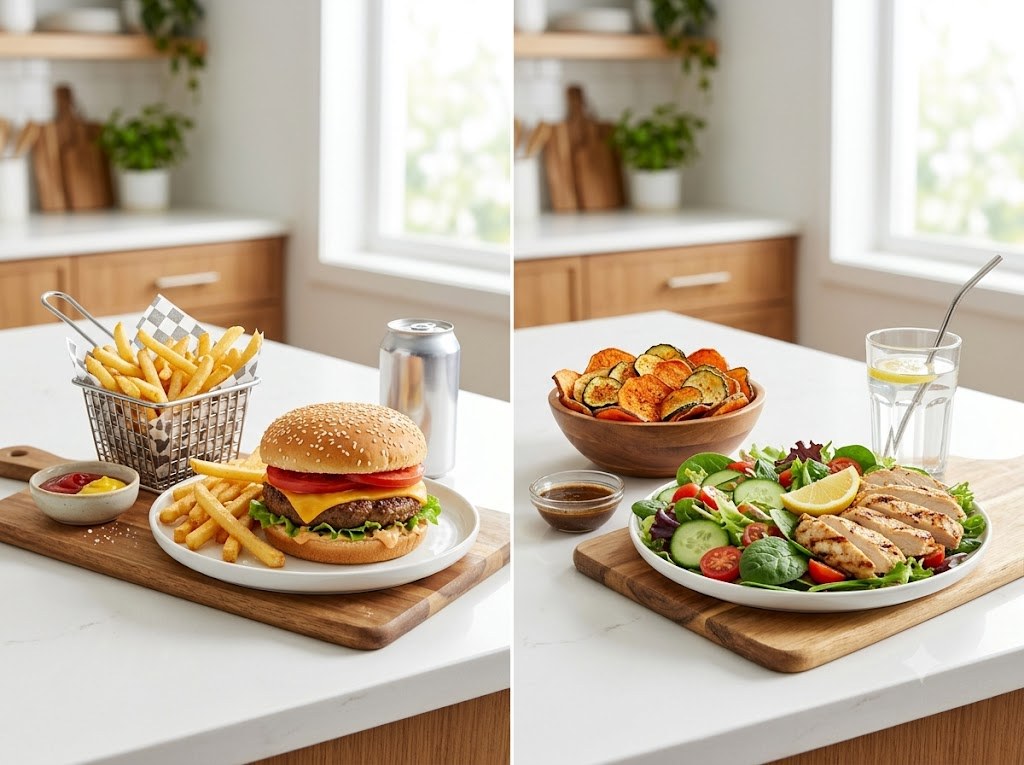
One of the simplest ways to make any comfort food meal healthier is to serve a large, well-dressed salad or a substantial vegetable side alongside a smaller portion of the rich main dish. You eat the same volume of food, the meal feels just as satisfying, and the overall calorie and nutrient profile shifts significantly toward the positive without any recipe change at all.
The Mindset Shift: How to Make Comfort Food Healthier for Life
Learning how to make comfort food healthier becomes a permanent habit when you stop framing it as deprivation and start framing it as skill. You are not eating a worse version of your favorite food. You are getting better at making it. Every swap you master makes the next one easier, and the cumulative effect on how you feel, how you look, and how much energy you have is dramatic.
External reference: Eating Well — Healthy Comfort Food Makeovers
If you are also working on eliminating junk food from your diet, our guide on how to make junk food healthy covers 11 specific swaps that pair perfectly with these comfort food strategies. For high-protein healthy alternatives, try our High Protein Baked Oats or the viral Cottage Cheese Flatbread Tacos.
Frequently Asked Questions
Q: What is the easiest way to understand how to make comfort food healthier at home?
A: Mashed potatoes are one of the easiest. Replacing butter and cream with Greek yogurt, olive oil, and roasted garlic produces a result that is arguably more flavorful than the original with far better nutritional value.
Q: Can comfort food be part of a healthy diet?
A: Absolutely. The key is frequency and ingredients. Enjoying upgraded versions of your favorite comfort meals regularly is entirely compatible with a healthy lifestyle. The goal is never perfection but sustainable better choices most of the time.
Q: Does healthy comfort food taste as good?
A: When the swaps are done thoughtfully, yes. The recipes that work best are ones where the flavor profile and texture are maintained and only the ingredients that add empty calories are replaced.
Q: What is the best oil to use in healthy comfort food cooking?
A: Extra virgin olive oil for lower-heat cooking and dressings, and avocado oil for high-heat roasting and sauteing. Both are rich in monounsaturated fats and have far better nutritional profiles than the refined vegetable oils typically used in comfort food recipes.
Q: How do I make creamy sauces healthier without losing the richness?
A: Greek yogurt, pureed white beans, cauliflower puree, and cashew cream are all excellent bases for creamy sauces that deliver richness and body without the saturated fat load of heavy cream or full-fat butter.