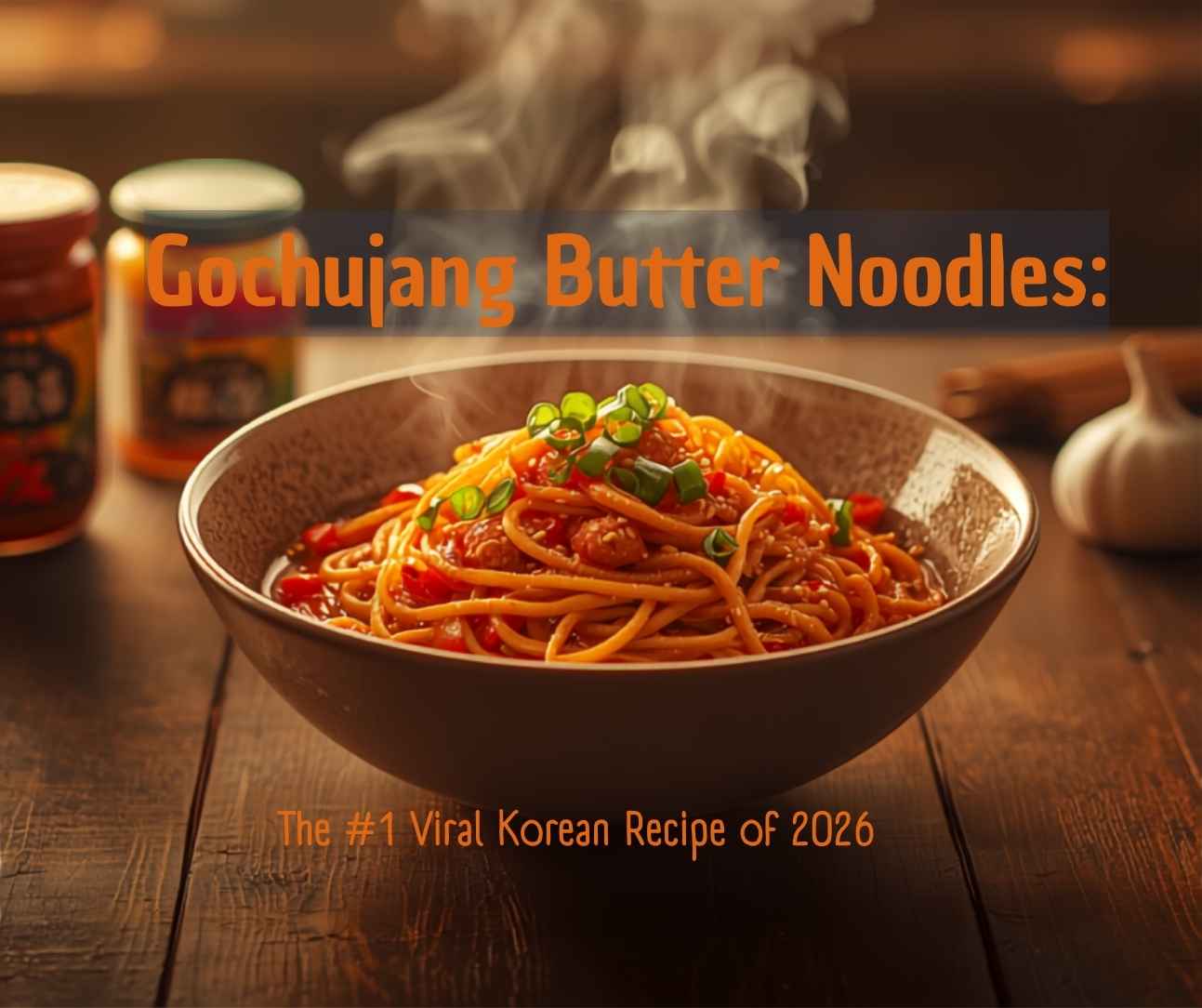
Gochujang butter noodles are the number one viral recipe of 2026. Korean chili paste meets brown butter in a ten-minute noodle dish that has dominated TikTok food content, generated millions of home cook attempts, and introduced gochujang — fermented Korean red chili paste — to an enormous new global audience across the US, UK, and India.
The appeal is exactly what viral food content requires: few ingredients, fast to make, dramatic flavour, and a result that photographs beautifully. Here is the definitive guide to getting it right.
What Is Gochujang?
Gochujang is a fermented Korean condiment made from red chili powder, glutinous rice, fermented soybeans, and salt. It is deep red, intensely flavoured, spicy but with a complex sweetness and umami depth that chili sauce alone does not have. The fermentation process gives it a miso-like richness that transforms almost anything it touches.
It is available in Korean grocery stores, most Asian supermarkets, and increasingly in mainstream supermarkets across the UK, US, and in major Indian cities. It is sold in a red tub and keeps in the fridge for months after opening.
Why Gochujang Butter Noodles Went Viral
The combination of gochujang and brown butter is the key discovery. Brown butter — beurre noisette — is a French technique of cooking butter until the milk solids toast and develop a nutty, caramel-like flavour. When combined with the spicy, fermented depth of gochujang, the result is a sauce with extraordinary complexity from ingredients that take under five minutes to prepare. The flavour profile — spicy, sweet, nutty, umami, slightly creamy — is exactly what the algorithm rewards: a dramatic result from minimal skill.
The Classic Gochujang Butter Noodles Recipe
Ingredients (serves 2)
- 200g noodles (ramen, udon, soba, or any long pasta work — the recipe is forgiving)
- 3 tablespoons unsalted butter
- 2 tablespoons gochujang paste
- 2 garlic cloves, finely minced
- 1 tablespoon soy sauce
- 1 tablespoon honey or brown sugar
- 1 teaspoon sesame oil
- 2 tablespoons pasta water (reserved)
- To serve: sliced spring onions, toasted sesame seeds, soft-boiled egg (optional)
Method
Step 1: Cook the noodles. Boil noodles according to package instructions. Reserve 4 tablespoons of the starchy cooking water before draining — this is essential for the sauce. Drain the noodles and set aside.
Step 2: Brown the butter. In a wide pan over medium heat, melt the butter and continue cooking, swirling the pan, until it turns golden brown and smells nutty — about 3 to 4 minutes. Watch carefully: brown butter and burnt butter are separated by about 30 seconds. Remove from heat immediately when it reaches a deep golden colour.
Step 3: Build the sauce. Return the pan to low heat. Add the minced garlic and cook for 30 seconds in the brown butter. Add the gochujang paste and stir it into the butter — it will sizzle and darken slightly. Add the soy sauce, honey, and sesame oil. Stir everything together. Add 2 tablespoons of the reserved pasta water to loosen the sauce to a coating consistency.
Step 4: Toss the noodles. Add the drained noodles to the sauce and toss vigorously to coat every strand. Add more pasta water if needed — the sauce should cling to the noodles without pooling at the bottom of the pan. Taste and adjust: more gochujang for heat, more honey for sweetness, more soy for salt.
Step 5: Serve immediately. Top with sliced spring onions, a scatter of sesame seeds, and a soft-boiled egg if including one. Eat immediately — these noodles do not hold well.
Variations
Gochujang butter noodles with protein: Add shrimp (cook in the butter before building the sauce), thinly sliced beef (cook separately and toss in at the end), or a fried egg on top. For vegetarian protein, crispy tofu — pressed dry and pan-fried until golden before adding to the noodles — works exceptionally well.
Creamy gochujang noodles: Add 3 tablespoons of heavy cream or full-fat coconut milk to the sauce after the gochujang step. This mellows the heat, adds richness, and creates a pasta-like creaminess that makes the recipe more accessible for lower spice tolerances. This version is particularly popular in the UK.
Gochujang butter pasta: Substitute spaghetti or linguine for the noodles. The sauce works identically with Italian pasta. Finish with a small handful of parmesan shaved over the top — the combination of Korean and Italian fermented dairy is unexpectedly brilliant.
Cold sesame gochujang noodles: Cool the cooked noodles completely, toss in the gochujang butter sauce at room temperature or slightly warm, and serve as a cold noodle salad with cucumber ribbons, shredded carrot, and sliced avocado. A perfect make-ahead lunch.
Getting the Spice Level Right
Gochujang varies in heat between brands and formulations. Start with 1.5 tablespoons if you are spice-sensitive and increase from there. The honey or sugar and the butter significantly tame the heat relative to gochujang eaten raw — most people who consider themselves low-spice tolerance can handle 2 tablespoons in this recipe without discomfort. The fermented sweetness comes through more clearly at lower quantities too.
For more quick, high-impact weeknight recipes, see our guide on how to make junk food healthy and for high-protein additions to any bowl, high protein desserts covers how to hit protein targets even in the sweet courses.
External references: Bon Appétit — Gochujang Butter Noodles | NYT Cooking — Spicy Korean Noodles | BBC Good Food — What Is Gochujang?
Frequently Asked Questions
What are gochujang butter noodles?
Gochujang butter noodles are a viral Korean-inspired recipe combining gochujang (fermented Korean chili paste) with brown butter, soy sauce, garlic, and honey to create a deeply flavoured sauce tossed with noodles. The dish takes under 10 minutes and produces a spicy, sweet, nutty, umami-rich flavour that has made it the number one viral recipe of 2026.
What does gochujang taste like?
Gochujang tastes spicy, sweet, savoury, and deeply umami-rich. The fermentation process gives it a complexity similar to miso — it is not a simple heat-only chili sauce. The spice level is moderate to high depending on the brand, but the sweetness and fermented depth balance the heat in a way that makes it more addictive than overwhelming.
Can you use any noodles for gochujang butter noodles?
Yes. Ramen noodles, udon, soba, rice noodles, spaghetti, and linguine all work well. The sauce adheres to any noodle or pasta that has surface texture. Thin rice noodles are less ideal as they can clump. Ramen or udon produce the most authentic result; spaghetti is the easiest substitution if Asian noodles are unavailable.
How spicy are gochujang butter noodles?
With 2 tablespoons of gochujang, the heat level is moderate — comparable to a medium curry or a mildly spicy pasta arrabbiata. The butter and honey significantly tame the heat compared to eating gochujang directly. Start with 1 to 1.5 tablespoons if you are spice-sensitive and increase from there.
Where can I buy gochujang?
Gochujang is available at Korean and Asian grocery stores globally, at major supermarkets in the UK (Sainsbury’s, Waitrose, and Tesco all stock it), at Asian grocery stores and Whole Foods in the US, and at specialty food stores in Indian metros including Delhi, Mumbai, and Bangalore. It is also widely available online. Look for a red tub — the most common brand globally is CJ Haechandle.