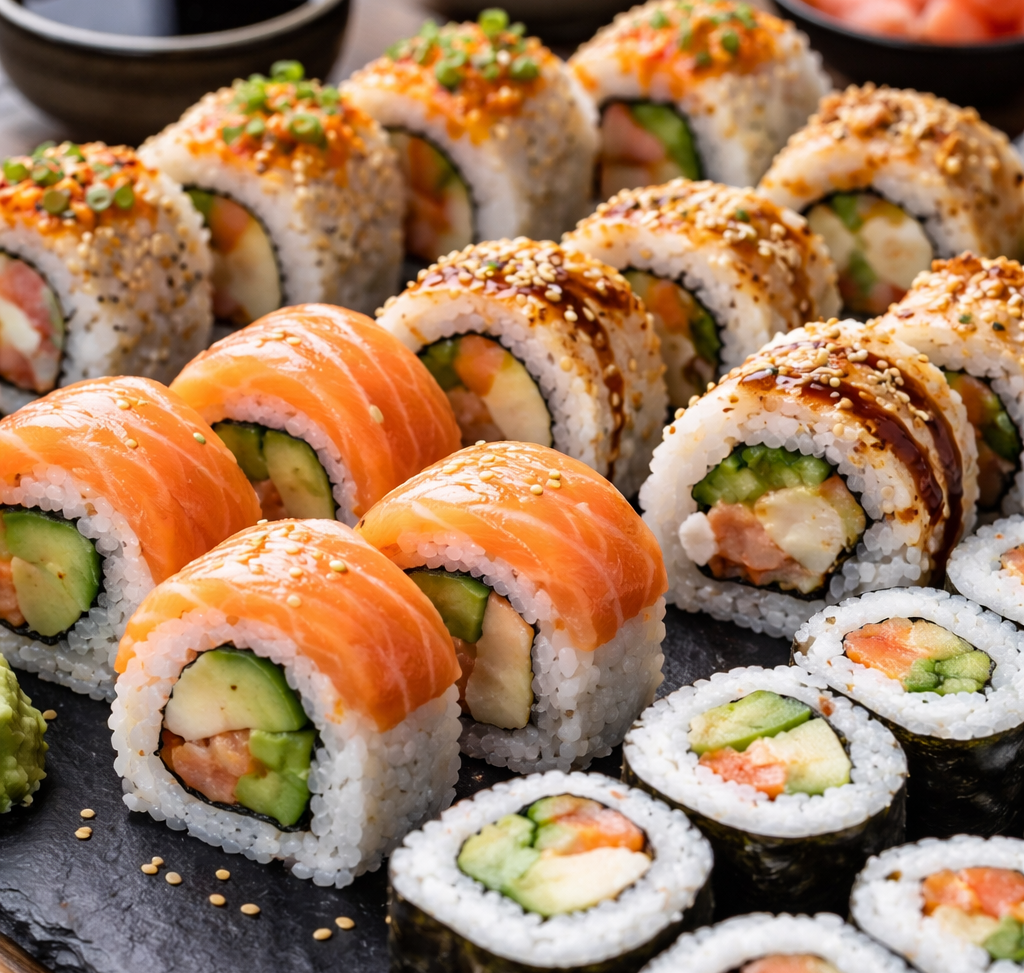
Sushi is no longer just a restaurant delicacy. It’s a fun, creative, and healthy dish you can make at home. Whether you’re looking to impress guests or enjoy a hands-on cooking experience, this step by step sushi guide makes it easy for beginners to create restaurant-quality sushi rolls in your own kitchen.
Ladle of Contents
Table of Contents
Making sushi at home also gives you full control over ingredients from fresh fish to vegan alternatives, ensuring every bite is as clean and flavorful as possible.
Ingredients You Will Need
Sushi Rice
- 2 cups Japanese short-grain rice
- 2 and a half cups water
- 3 tablespoons rice vinegar
- 1 and a half tablespoons sugar
- 1 teaspoon salt
Fillings (Choose Your Favorites)
- Sushi-grade salmon or tuna
- Crab sticks or cooked shrimp
- Avocado, cucumber, and carrots sliced thin
- Cream cheese optional
Extras
- Nori sheets (seaweed) – 100 Full Sheets Yaki Sushi Nori Roasted Seaweed Rolls, 7.05 Ounce 4.5 ⭐ stars, 3,684 reviews. Twice-roasted, crisp texture, clean ocean taste, gluten-free, vegan, nutrient-rich, perfect for sushi, kimbap, hand rolls, or rice balls.
- Soy sauce
- Wasabi
- Pickled ginger
- Bamboo sushi rolling mat
Pro Tip: Using premium nori sheets ensures your rolls stay intact and taste authentic while you learn the sushi-making technique.
Step 1: Prepare Sushi Rice
- Rinse the rice under cold water until the water runs clear
- Cook the rice with water in a rice cooker or on the stovetop
- In a small saucepan, heat rice vinegar, sugar, and salt until dissolved but do not boil
- Gently fold the vinegar mixture into the cooked rice
- Let rice cool to room temperature before using
Pro Tip: Well-seasoned rice is the foundation of great sushi. Avoid refrigerating rice as it can affect texture.
Step 2: Prepare Your Ingredients
- Slice fish and vegetables into long, thin strips
- Keep fillings uniform for easy rolling
- Arrange everything within reach before starting
Optional Store-Bought Sushi for Inspiration:
- Genji Sushi Avocado Cucumber Roll, 8.36 Ounce ⭐ 4.5 stars, light and healthy. Perfect for beginners or as a snack while practicing homemade rolls.
- Genji Sushi Salmon Avocado Roll, 8.54 Ounce ⭐ 4.3 stars. Sushi-grade salmon with creamy avocado, a great reference for beginners.
- Genji Sushi Spicy Salmon Avocado Roll, 7.13 Ounce ⭐ 4.2 stars. Authentic Japanese flavor with sesame topping, perfect for trying a spicy variation.
These ready-made rolls help beginners understand flavors and textures before making their own creations.
Step 3: Rolling Sushi (Makizushi)
- Cover a bamboo mat with plastic wrap and place it on a flat surface
- Lay one nori sheet shiny side down
- Spread a thin, even layer of rice over the nori, leaving one inch at the top
- Place your fillings horizontally across the center
- Roll tightly using the bamboo mat while applying gentle pressure
- Seal the edge with a little water
- Slice into 6 to 8 pieces with a sharp, wet knife
Tip: Less filling makes it easier to roll. Overstuffing can break the roll.
Step 4: Popular Sushi Variations
California Roll
Crab sticks, avocado, and cucumber. Beginner-friendly and easy to make.
Salmon Avocado Roll
Fresh, nutrient-rich, and delicious. Compare flavors with Genji Sushi Salmon Avocado Roll for inspiration.
Spicy Tuna Roll
Tuna mixed with chili mayo for a bold flavor. Use Genji Sushi Spicy Salmon Avocado Roll as a reference for taste and presentation.
Vegan Sushi Rolls
Avocado, cucumber, and carrot. Healthy and plant-based. Using premium nori sheets ensures a perfect roll every time.
Step 5: Serving Your Sushi
- Serve immediately with soy sauce, wasabi, and pickled ginger
- Garnish with sesame seeds or microgreens for a restaurant-style presentation
- Pair with green tea or sake for an authentic experience
Tips for Beginners
- Always use sushi-grade fish to ensure safety
- Keep your hands wet to prevent rice from sticking
- A sharp knife is key for clean slices
- Practice makes perfect. Your first roll may not be perfect but it will taste amazing
FAQ
Q1: Can beginners make sushi at home?
Yes, this guide makes it easy for anyone to create beautiful and tasty sushi rolls.
Q2: What rice is best for sushi?
Japanese short-grain rice is ideal because it is sticky and absorbs vinegar well.
Q3: Can I make sushi without raw fish?
Absolutely. Use cooked shrimp, crab sticks, or vegetables for tasty alternatives.
Q4: How long does homemade sushi last?
Sushi is best eaten fresh. Raw fish rolls should be consumed within 24 hours, while vegetarian rolls can last up to 48 hours if refrigerated.
Q5: Can I use ready-made sushi for practice?
Yes, rolls like Genji Sushi Avocado Cucumber Roll or Spicy Salmon Avocado Roll help you learn flavors and textures before making your own.
Conclusion
Making sushi at home is fun, healthy, and rewarding. With quality ingredients, premium nori sheets, ready-made sushi inspiration, and a little practice, you can create easy sushi rolls that taste like they came from a professional kitchen.
Visit toastfried.com for trusted food insights, trending recipes, kitchen tips, and inspiration created for real food lovers.